
Cleaner Air At Home
Split System AC Cleaning That Tackles Mould and Bacteria
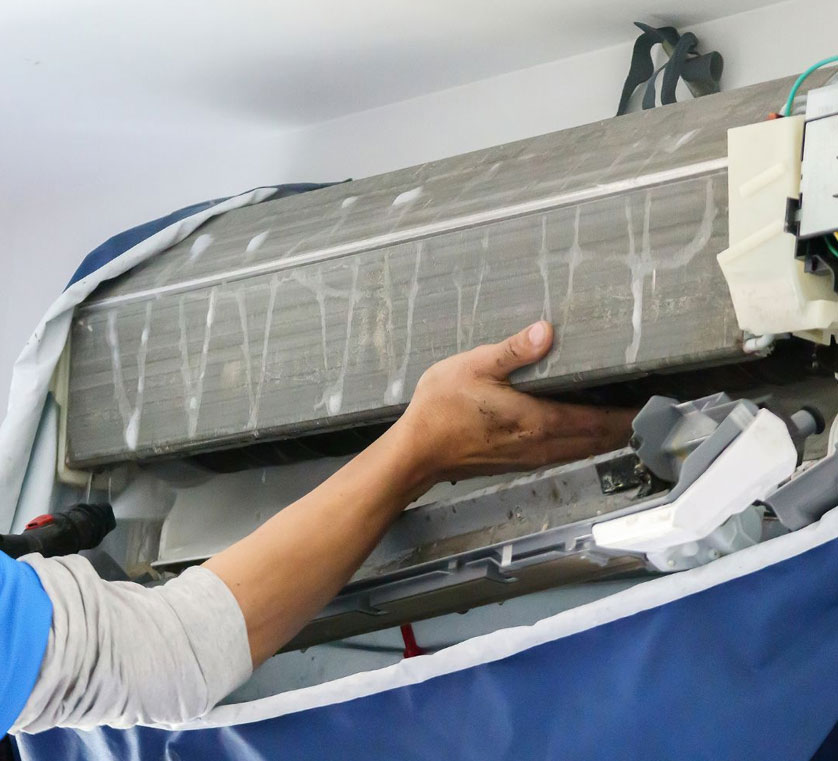
Every time your split system runs, warm room air passes over a cold, damp coil. Dust sticks to that moisture, and in the dark inside of the unit it becomes food for mould and bacteria. Over a few seasons a film builds on the coil and the barrel-shaped blower wheel, and the unit starts blowing those spores and odours straight back into the room.
Our split system AC cleaning is aimed at that hidden build-up. We remove the contamination from the parts you cannot reach, flush the drain so water stops pooling, and treat the unit so it smells clean again. It is the simplest way to improve the air in a bedroom or living area that runs the air conditioner for hours at a time.
What Grows Inside
Mould, Bacteria and Allergens: What Builds Up in Your Unit
Most people only see the filters, but the filters are just the first line of defence. Fine dust and moisture get past them and settle deeper inside, where the real health problems start:
| Where it builds up | What it can mean for your home |
|---|---|
| Evaporator coil | Damp dust and biofilm that feed mould and bacteria |
| Blower wheel | Black or grey slime that is blown into the room every time the fan spins |
| Drain tray and line | Standing water, slime and the classic musty smell |
| Louvres and casing | Visible black spots near the air outlet |
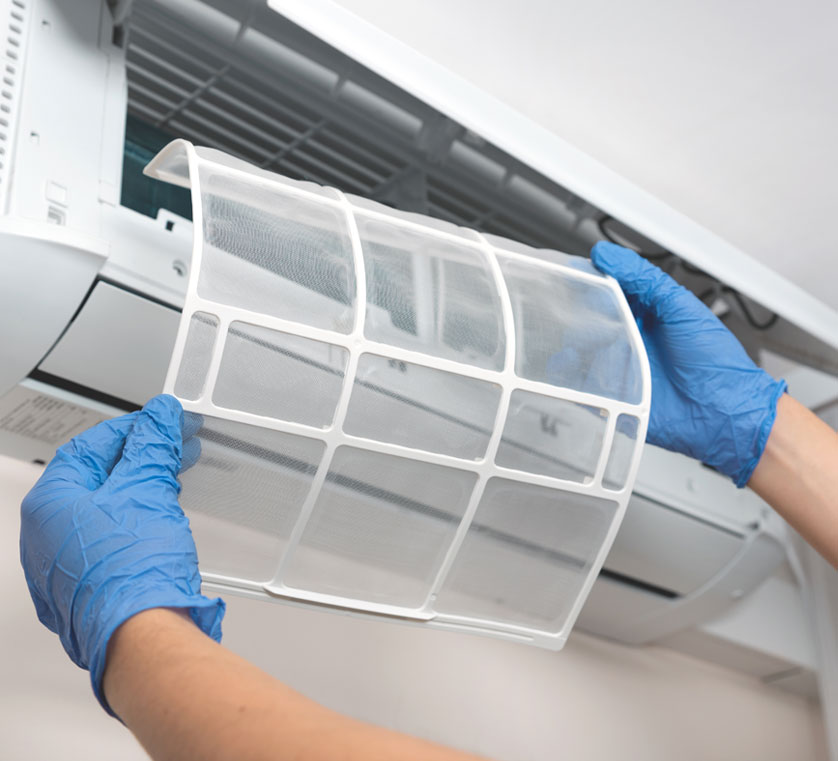
| Filters | Dust, pet hair and pollen that recirculate if not cleaned |
If you can see black specks on the louvres, the inside is usually worse. A filter wipe will not reach it. Regular air conditioning servicing keeps the system running well, while a full clean deals with the hygiene side.
Warning Signs
Signs Your Split System Is Affecting Your Air Quality
A dirty indoor unit rarely fails all at once. Instead, it slowly makes the room less pleasant to be in. Look out for these signs:
- A musty, damp or “old sock” smell when the unit first starts
- Black spots on the louvres or around the air outlet
- Sneezing, itchy eyes or a stuffy nose that gets worse when the air conditioner is on
- Water dripping from the indoor unit, a sign of a blocked drain
- Dust settling on furniture faster than usual in the room with the unit
Smells and visible mould usually mean the coil and blower wheel need a proper clean rather than a quick filter rinse. If anyone in the house has asthma or allergies, or the unit runs overnight in a bedroom, it is worth having it checked sooner rather than later. We will tell you honestly whether a standard clean is enough or whether the unit needs a deeper treatment.
Inside And Out
What Our Split System AC Cleaning Includes
Every unit is different, but a typical clean includes:
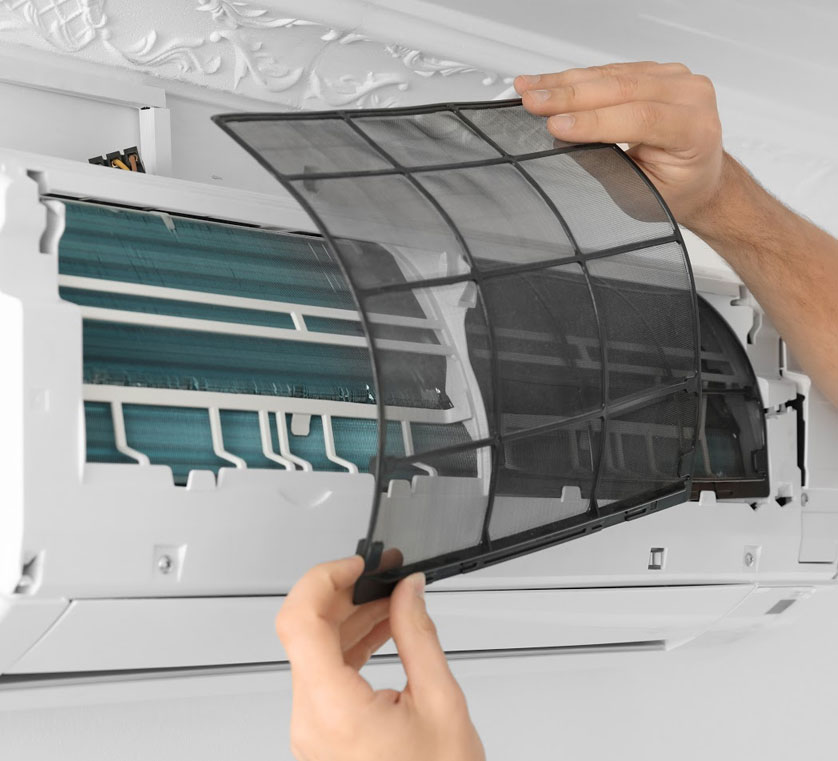
- Filter wash and inspection – we wash the filters and check them for damage or wear.
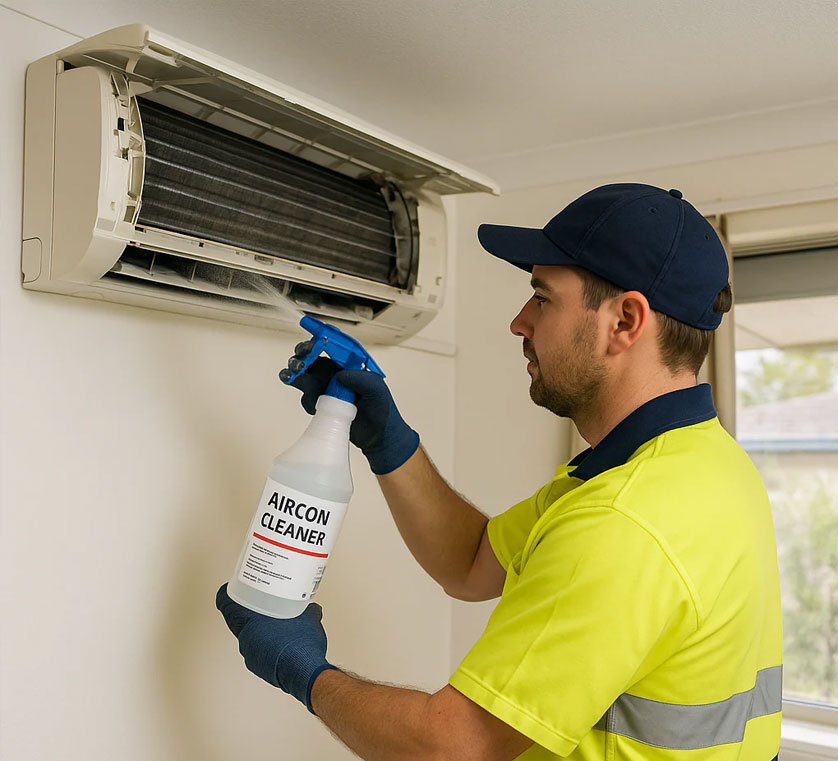
- Coil clean – the indoor coil is cleaned to lift dust, grime and mould from the fins.
- Blower wheel clean – we clean the fan barrel, where much of the mould and slime collects.
- Drain tray and line flush – we clear the drain so water and slime stop building up.
- Odour treatment – a suitable treatment for the coil to help keep smells away for longer.
- Test run – we check airflow, drainage and operation before we pack up.
Perth Pricing Guide
How Much Does Split System AC Cleaning Cost?
In Perth a standard split system AC cleaning usually costs about $120–$220 per unit. Units with heavy mould, a strong smell or a blower wheel that needs a deeper treatment generally cost around $180–$300. Multiple units at the same address usually cost less per unit.
| Price driver | How it affects the cost |
|---|---|
| Level of build-up | Heavy mould or slime takes longer and may need a deep clean |
| Number of units | Extra units at the same visit cost less each |
| Access | High walls, ladders or tight spaces add time |
| Unit size and type | Larger or older units can take longer to strip and clean |
How It Works
Our Four-Step Split System Cleaning Process
We keep each visit simple and tidy, with as little disruption to your home as possible:
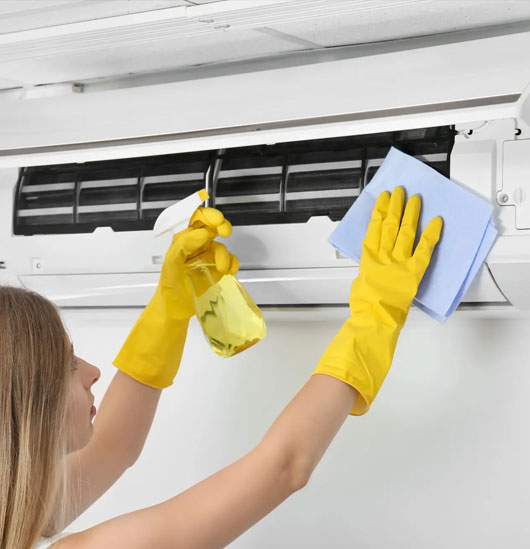
- Inspect and protect – we check the unit, note any mould or leaks, and cover the wall and floor beneath it.
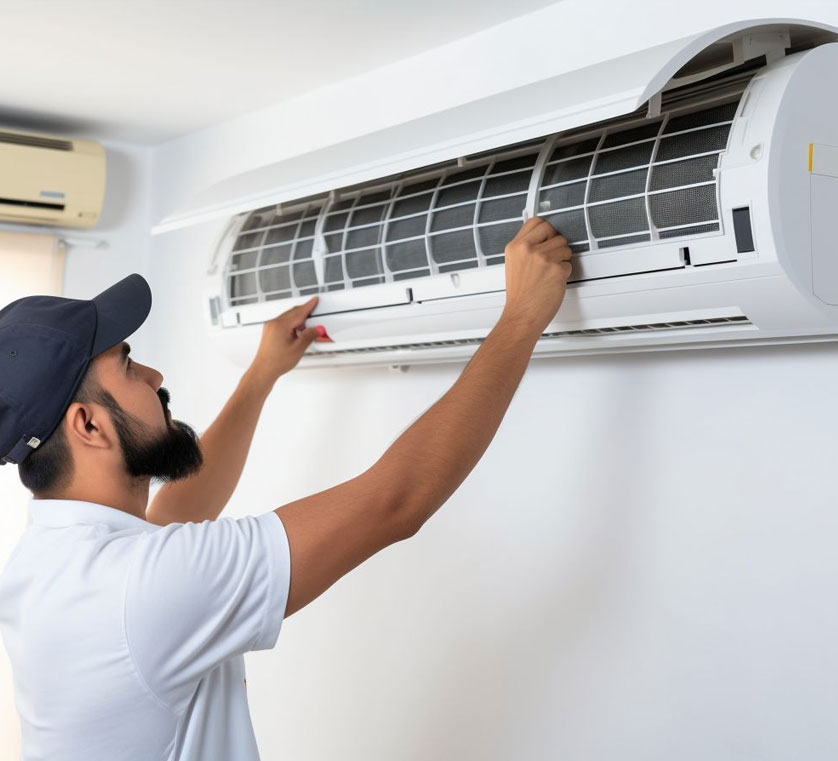
- Clean the filters and coil – filters are washed and the coil is cleaned to remove dust and growth.
- Clean the fan and drain – the blower wheel is cleaned and the drain tray and line are flushed.
- Treat, test and tidy – we treat the coil, run the unit to check airflow and drainage, then clean up.
For Your Household
Healthier Air for Children, Allergy Sufferers and Pets
Some households feel the effects of a dirty air conditioner more than others. Babies and young children spend long hours in bedrooms with the unit running. People with asthma or allergies react quickly to mould spores and dust. Pets add hair and dander that clog filters fast.
For these homes we suggest a few simple habits:
- Wash the filters every few weeks during heavy use
- Run the fan-only or dry mode for a few minutes before switching off to help the coil dry
- Book a professional clean at least once a year, or twice if the unit runs most days
- Do not ignore a musty smell, because it usually means growth inside
A clean unit also works more efficiently, so you may notice it cools faster and runs more quietly. If you want regular care rather than a one-off clean, ask about our air conditioner maintenance visits, which can be booked around your family’s routine.
Related Services
More Ways We Keep Your Air Conditioning Healthy
Cleaning is one part of looking after your system. These related services help keep it running well:
- Air conditioning servicing
- Air conditioner maintenance
- Split system servicing
- Split system repairs
- Step-by-step split system cleaning
- How often to clean a split system
Need cleaning plus a full service check? See our air conditioning servicing page.

Meeting Quality & Safety Requirements
You will have peace of mind because our team will ensure that all the professional work done for your home will meet the strictest quality and safety requirements set by our industry and the Australian Government.

Establishing A Single Point of Contact
You will have reduced stress because there will be one person you can get in touch with to discuss all aspects and help manage all the complexities of the professional work done for your home from start to finish.

Maintaining Transparent Communication
You will have full knowledge of work progress because we will maintain continuous and transparent communication throughout the process to provide you with consistent updates and effective issue resolutions.
Meeting Quality & Safety Requirements
You will have peace of mind because our team will ensure that all the professional work done for your home will meet the strictest quality and safety requirements set by our industry and the Australian Government.
Frequently Asked Questions About Split System AC Cleaning
Your Questions About Mould, Smells and Clean Air
Yes. Split system AC cleaning targets the coil, blower wheel and drain tray, which is where mould usually grows. We clean away visible growth and treat the coil, though very heavy or recurring mould can take a deeper clean.
A musty smell usually comes from mould and bacteria on the coil or blower wheel, or from slime and standing water in the drain tray. Cleaning those parts normally removes the smell at its source.
Mould spores and bacteria blown into a room can irritate the nose, eyes and airways, especially for people with asthma or allergies. If you notice symptoms when the unit runs, have it checked and cleaned.
Usually not. Filters catch larger dust, but mould grows deeper inside on the coil and fan. A professional split system AC cleaning reaches those parts.
Wash the filters regularly, run the fan or dry mode for a few minutes before switching off so the coil can dry, and book a professional clean at least once a year.
We use cleaning products made for air conditioners and rinse them away from the coil. Let us know about any sensitivities in your household and we will talk through the products before we start.
It can. Dust, pollen, pet dander and mould spores collect inside the unit and are blown back out. Keeping it clean reduces how much of that is recirculated.
Most wall split units take about one to two hours each, depending on the level of build-up and access.
Why Greenarmy Services is Your #1 Choice

Proven Top-Tier Quality At Affordable Rates
You will have experts tested and proven by countless homeowners in Western Australia to deliver a wide range of the highest quality services with unmatched quality and reliability delivered at rates that won’t break the bank!

Highly Skilled & Certified Technicians
You will have fully certified, licenced, and insured technicians with decades of knowledge and expertise you can trust to ensure the safety, health, integrity, viability, and energy efficiency of your household for generations to come.

Impeccable Timing With Transparent Rates
You will have a wide range of impeccably precise and timed professional work done for your home at affordable rates that detail all material and labour costs for full disclosure and complete transparency with no hidden costs or charges.