
Pro vs DIY Cleaning
Professional AC Cleaning – What It Does That DIY Can’t
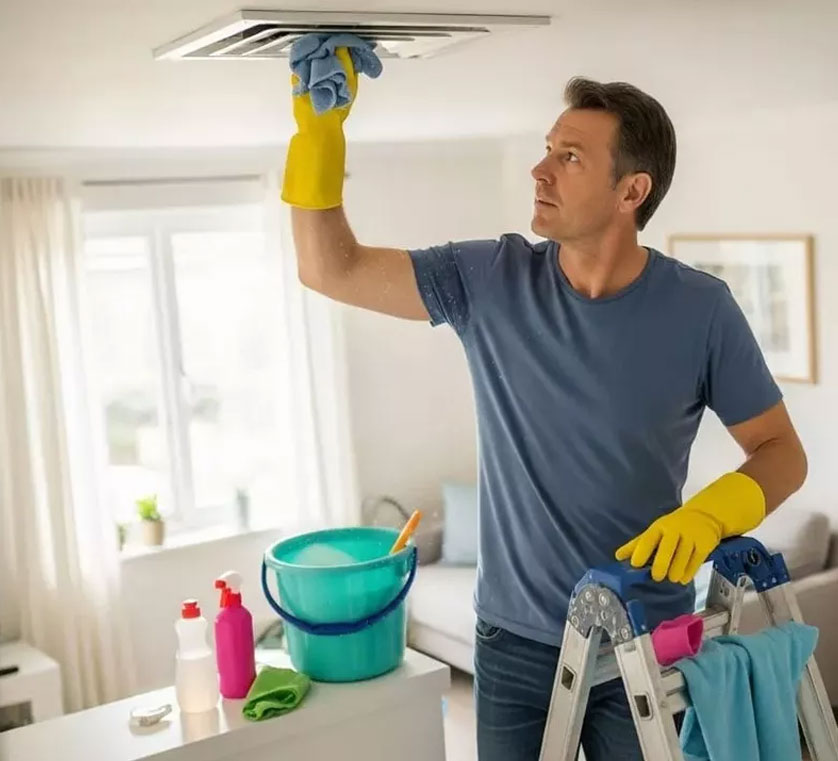
There is plenty you can do yourself. Washing a split system filter or vacuuming a ducted return-air filter every few months is worthwhile, and we encourage it. But a filter is only the front door. Behind it sit the coil, the fan barrel, the drain tray and – on ducted systems – the ducts and outlets, and that is where most of the grime ends up.
Professional AC cleaning is about reaching those parts safely, with the right equipment and products, without damaging electronics or soaking your wall. This page compares what a homeowner can realistically do with what a trained technician can do, for both split and ducted systems, so you can decide which jobs to keep and which to hand over.
Side by Side
Professional vs DIY AC Cleaning Compared
Here is how the two approaches compare for the main parts of a system:
| Task | DIY | Professional |
|---|---|---|
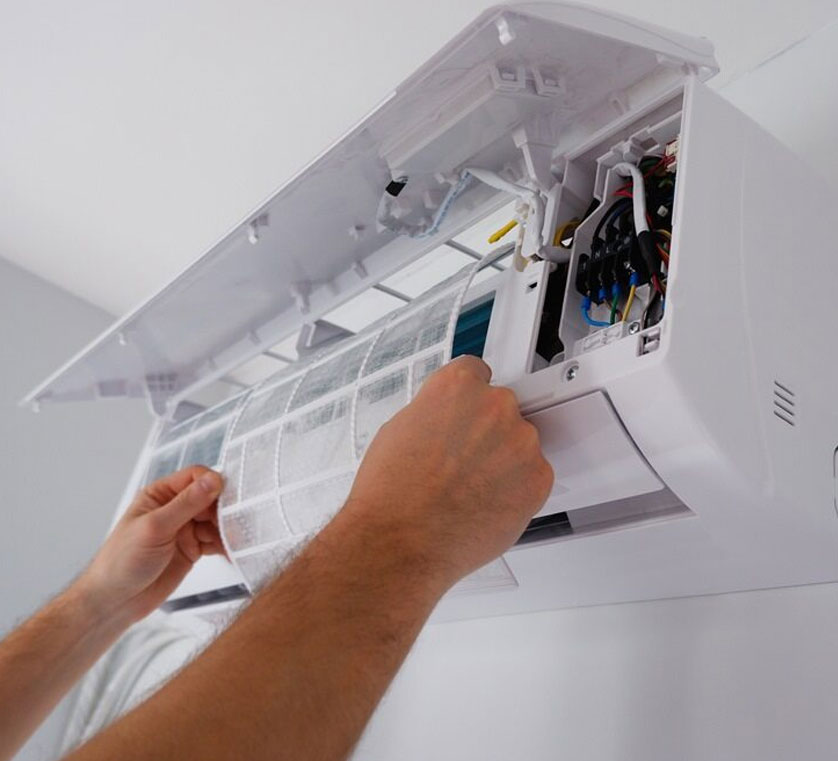
| Filters | Wash or vacuum – easy and worthwhile | Washed, checked for damage and refitted or replaced |
| Split coil | Surface wipe only | Coil cleaner applied and rinsed with a wash bag in place |
| Split fan barrel | Hard to reach without removing parts | Cleaned with the unit partly dismantled |
| Drain tray and line | Usually not reachable | Cleaned and flushed, then tested |
| Ducted coil and ducts | Roof access and tools needed | Cleaned and inspected from the roof space |
| Electrical safety | Risk of wetting electronics | Power isolated and electronics protected |
A professional clean pairs well with regular air conditioner maintenance, which looks after the mechanical side of the system.
Equipment & Products
The Equipment and Products Professionals Use
The difference between a wipe-down and a deep clean is mostly about tools:
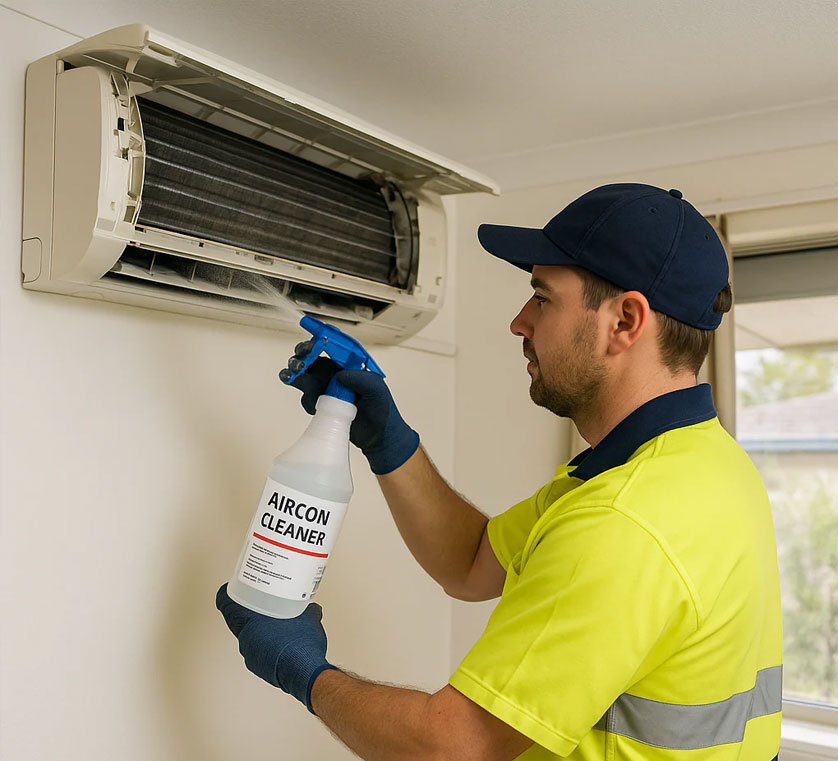
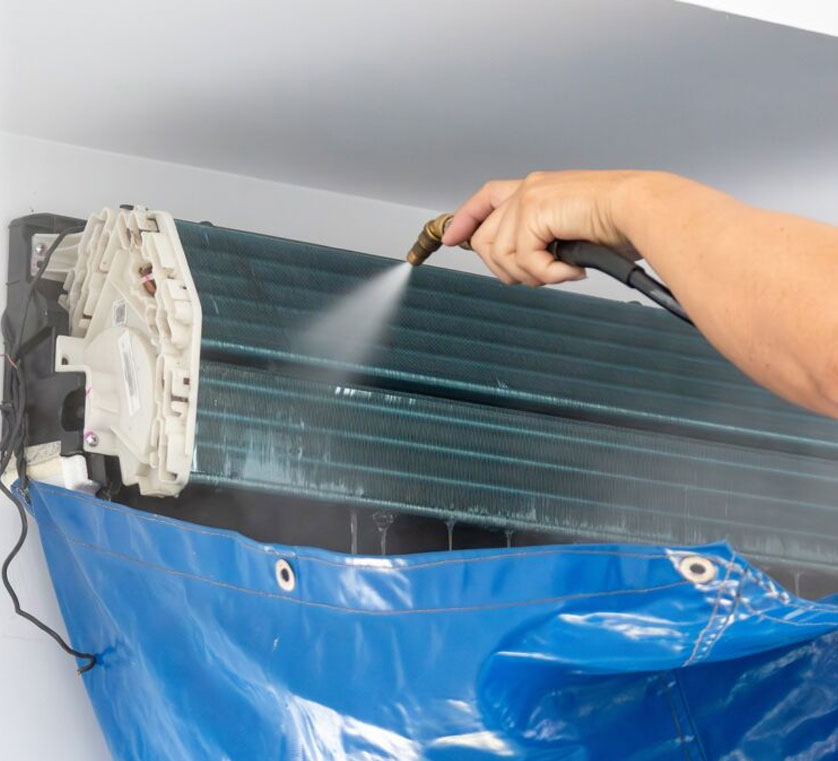
- Wash bags – fitted under a split unit so dirty water drains into a bucket, not down your wall
- Low-pressure sprayers – rinse coils and fan barrels without bending the fins
- Coil cleaners – chosen for the coil type and rinsed off properly afterwards
- Drain tools – flush and clear condensate lines that cause leaks
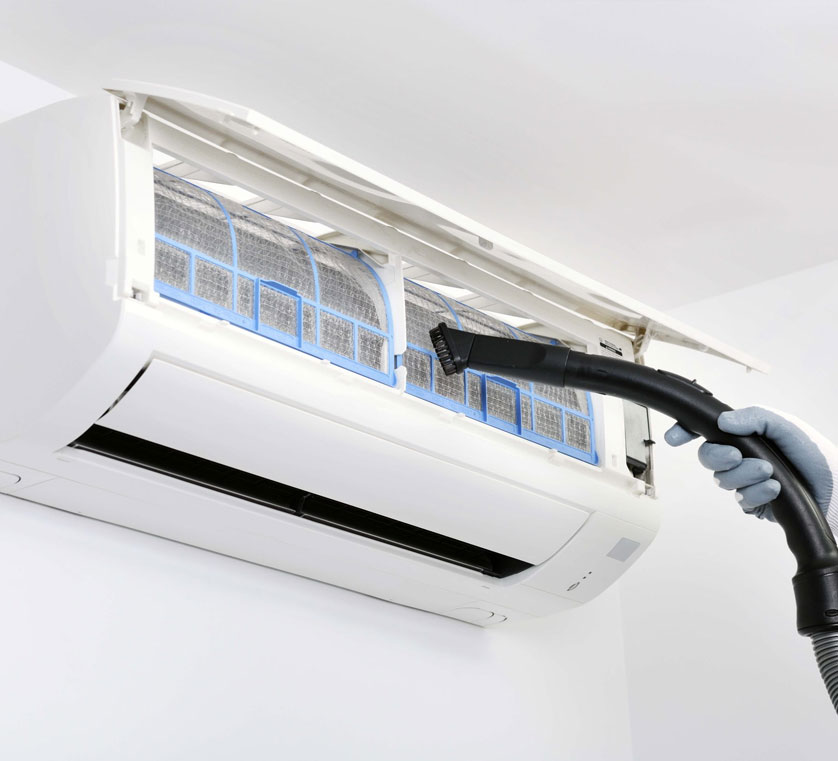
- Vacuums and duct brushes – for return-air boxes, outlets and accessible ducting
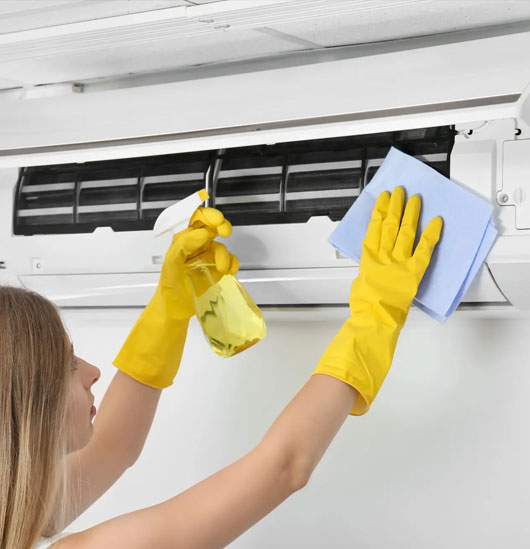
Supermarket aerosol sprays can mask smells for a few weeks, but they rarely rinse dirt out of the coil, and some leave a residue that attracts more dust. Using the wrong chemical on aluminium fins can also cause corrosion. Matching the product to the unit is part of the job.
Inclusions
What Your Professional AC Cleaning Includes
Every clean is tailored to the system type, but these are always covered:
- Safety first – power isolated and electronics covered before any water is used
- Filters – washed, inspected and refitted, or replaced if damaged
- Coil and fan – split coils and fan barrels rinsed; ducted coils cleaned in the roof
- Drainage – drain tray cleaned and condensate line flushed and tested
- Grilles and outlets – covers, louvres and ducted outlets cleaned
- Results check – test run, airflow check and before and after photos
Pricing
How Much Does Professional AC Cleaning Cost?
For split systems, a standard clean usually costs about $120–$220 per unit and a deep clean about $180–$300. For ducted systems, a filter clean or replacement is usually $150–$350, and a full system and duct clean about $400–$900+. The main things that move the price:
| Price driver | How it affects the cost |
|---|---|
| System type | Ducted cleans involve roof access and more parts |
| Number of units or outlets | Each extra split head or outlet adds time |
| Level of build-up | Heavy grime or mould needs a deeper clean |
| Access | High walls or tight roof spaces take longer |
| Parts | Replacement filters are an added cost |
Our Process
How We Carry Out a Professional Clean
The steps are the same for split and ducted systems; only the parts and tools change:
- Check and photograph – we inspect the system and take before photos
- Isolate and protect – power off, electronics covered, wash bag or drop sheets in place
- Deep clean – filters, coil, fan or ducts, drain and grilles cleaned with the right products
- Test and show you – we restart the system, check airflow and drainage, and show the after photos
Keep It or Hand It Over?
Which Cleaning Jobs to DIY and Which to Leave to Us
A sensible split between DIY and professional cleaning keeps a system in good shape without paying for more visits than you need.
Good DIY jobs: washing split system filters, vacuuming a ducted return-air filter, wiping the outside of indoor units and keeping the outdoor unit clear of leaves and garden growth.
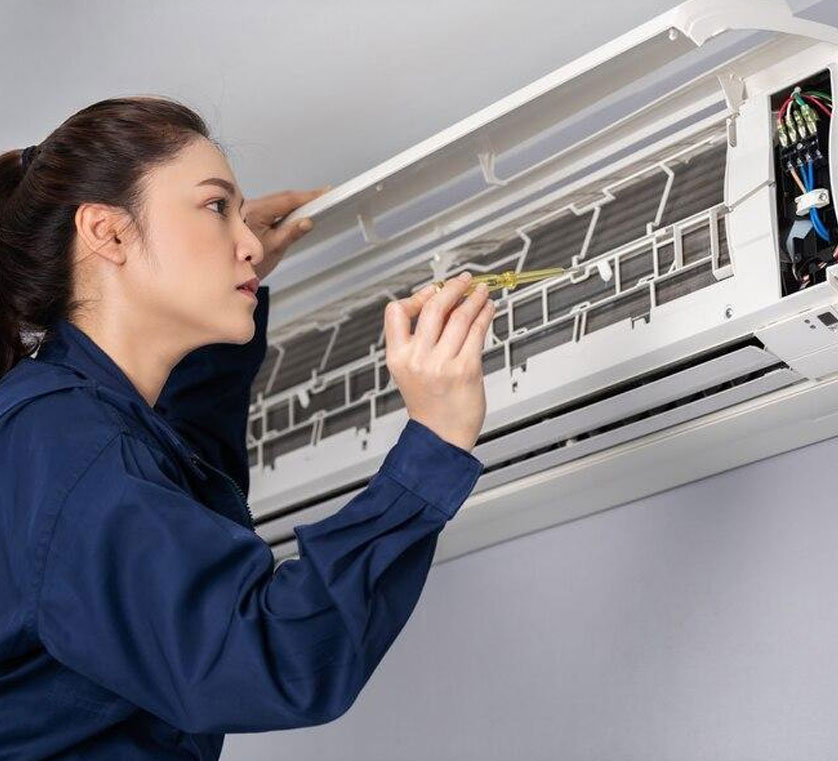
Best left to a professional: anything that involves taking covers off, spraying water near electronics, cleaning the coil or fan barrel, working in the roof space or clearing a blocked drain. These are the jobs where damage can happen – a bent coil, water in a circuit board, or a torn duct.
If you are already doing the DIY jobs regularly, a professional clean every one to two years is usually enough for most homes. If the system smells, drips or has lost airflow, it is worth booking sooner rather than later.
Related Services
Professional AC Cleaning and Related Services
Cleaning is one part of looking after a system. You may also find these pages useful:
- Split system cleaning
- Full ducted aircon cleaning
- Ducted filter cleaning
- Air conditioning servicing
- Air conditioner maintenance
- Professional AC cleaning in Perth
For ongoing care between cleans, see our air conditioner maintenance page.

Meeting Quality & Safety Requirements
You will have peace of mind because our team will ensure that all the professional work done for your home will meet the strictest quality and safety requirements set by our industry and the Australian Government.

Establishing A Single Point of Contact
You will have reduced stress because there will be one person you can get in touch with to discuss all aspects and help manage all the complexities of the professional work done for your home from start to finish.

Maintaining Transparent Communication
You will have full knowledge of work progress because we will maintain continuous and transparent communication throughout the process to provide you with consistent updates and effective issue resolutions.
Meeting Quality & Safety Requirements
You will have peace of mind because our team will ensure that all the professional work done for your home will meet the strictest quality and safety requirements set by our industry and the Australian Government.
Frequently Asked Questions About Professional AC Cleaning
Professional Cleaning or DIY? Your Questions Answered
Professional AC cleaning reaches the coil, fan barrel, drain tray and – on ducted systems – the ducts and outlets. Those parts need covers removed, wash bags, coil cleaners and roof access, which most homeowners do not have.
They can freshen the smell for a short time, but they rarely rinse dirt out of the coil. Some leave a residue that attracts dust, and the wrong product can corrode aluminium fins.
Washing the filters and wiping the cover is safe. Spraying water inside the unit is not recommended without isolating power and protecting the electronics, which is why deep cleaning is best left to a technician.
Yes. We clean wall-mounted split systems and ducted systems, including the return-air filter, indoor coil, drain, accessible ducts and ceiling outlets.
A wash bag is a waterproof cover fitted under a split unit during cleaning. It catches the dirty rinse water and channels it into a bucket, so it does not run down your wall or onto the floor.
Usually, yes. Removing dirt from the coil and fan restores airflow, which helps the system reach the set temperature faster. We check airflow after the clean so you can see the result.
If you clean the filters yourself every few months, professional AC cleaning every one to two years suits most homes. Book sooner if the system smells, leaks or has lost airflow.
Someone needs to let us in and show us the units or the manhole. You do not need to stay for the whole job, but we like to show you the before and after photos at the end.
Why Greenarmy Services is Your #1 Choice

Proven Top-Tier Quality At Affordable Rates
You will have experts tested and proven by countless homeowners in Western Australia to deliver a wide range of the highest quality services with unmatched quality and reliability delivered at rates that won’t break the bank!

Highly Skilled & Certified Technicians
You will have fully certified, licenced, and insured technicians with decades of knowledge and expertise you can trust to ensure the safety, health, integrity, viability, and energy efficiency of your household for generations to come.

Impeccable Timing With Transparent Rates
You will have a wide range of impeccably precise and timed professional work done for your home at affordable rates that detail all material and labour costs for full disclosure and complete transparency with no hidden costs or charges.