
Split System Troubleshooting
Split System AC Repair That Starts With the Right Diagnosis
A split system rarely fails without warning. It might blow lukewarm air on a hot afternoon, drip water down the wall, rattle at night or flash a light you have never seen before. Each of those symptoms can have several causes, and guessing usually means paying twice.
Our split system AC repair work starts with testing, not assumptions. We check refrigerant pressures, electrical readings, sensors, fans and drainage, read any stored error codes, and only then tell you what has failed and what it will cost to fix. Finding the true cause first is how we keep repeat call-outs to a minimum. Most faults are repaired on the first visit. If a part has to be ordered, we explain the timeframe and make the unit safe in the meantime.
Symptoms and Likely Causes
Not Cooling, Not Heating, Leaking or Noisy? What It Usually Means
The symptom you notice is a useful clue, but it is only the starting point. Here is how common split system complaints usually trace back to a cause:
| What you notice | Common causes we check |
|---|---|
| Blowing air but not cooling | Blocked filters or coil, low refrigerant from a leak, outdoor fan or capacitor failure |
| Not heating in winter | Reversing valve fault, faulty sensor, outdoor coil iced up or defrost problem |
| Water dripping from the indoor unit | Blocked drain line, dirty coil, poor unit fall or a cracked drain tray |
| Rattling, buzzing or squealing | Loose panels, worn fan bearings, debris in the fan or a failing compressor mount |
| Turns on then cuts out | Sensor faults, overheating outdoor unit, wiring or circuit board issues |
| Remote does nothing | Flat batteries, faulty remote, receiver or control board fault |
If your unit needs something beyond a quick fix, see our full range of split system repairs for the parts and faults we handle.
Error Codes and Warning Lights
What Those Flashing Lights and Error Codes Are Telling You
Most modern split systems run a self-check and display a code or a pattern of flashing lights when something is out of range. The code points to the area of the fault, such as a temperature sensor, the indoor fan, communication between the indoor and outdoor units, or high or low refrigerant pressure.
What a code does not tell you is why that part failed. A communication error might be a loose wire, a damaged interconnecting cable or a failed circuit board. A pressure fault might be a refrigerant leak or simply a badly blocked coil. That is why we treat the code as a lead and then confirm it with testing.
A few practical tips while you wait for us:
- Write down or photograph the code and how many times the light flashes.
- Note when it happens, for example on start-up or after an hour of running.
- Avoid repeatedly resetting the unit, as it can clear stored fault history.
Codes differ between makes and models, so passing these details on helps us bring the right parts to the first visit.
Included In Every Call-Out
What Your Split System AC Repair Visit Includes
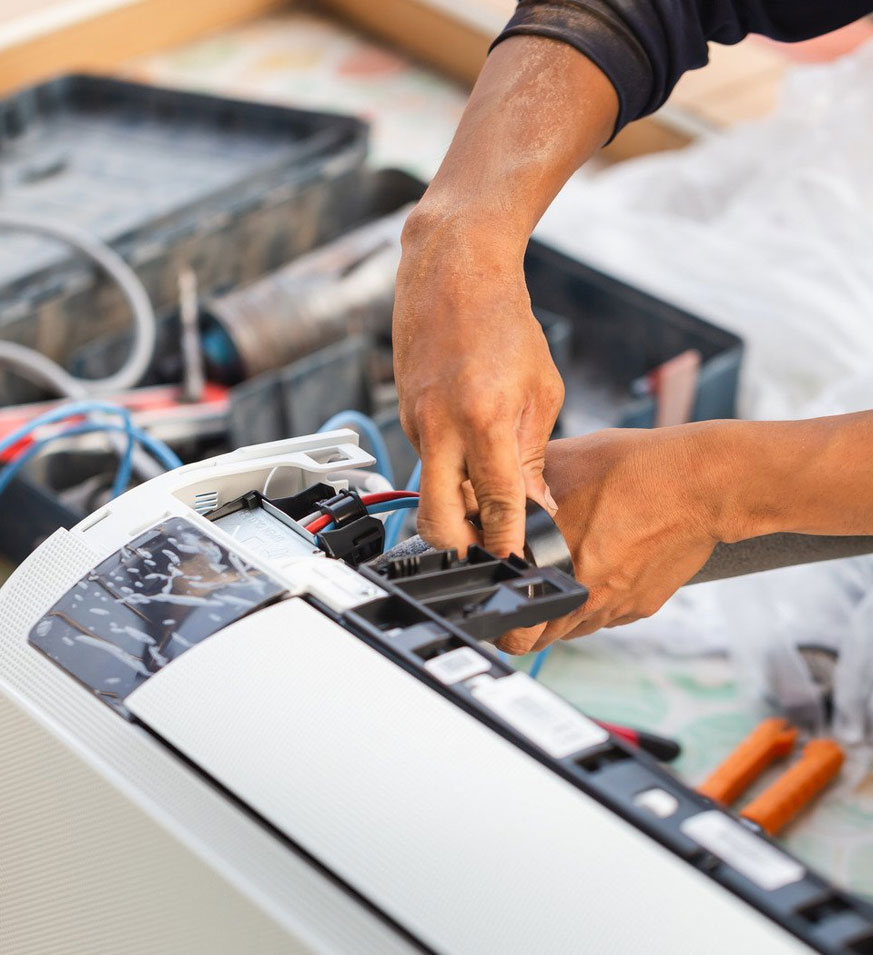
Every split system AC repair visit follows the same thorough routine, so nothing is missed:
- Fault history and symptom check – we ask what happened and when, then confirm the symptom ourselves.
- Error code and control check – stored codes, remote, receiver and settings are checked before we open anything up.
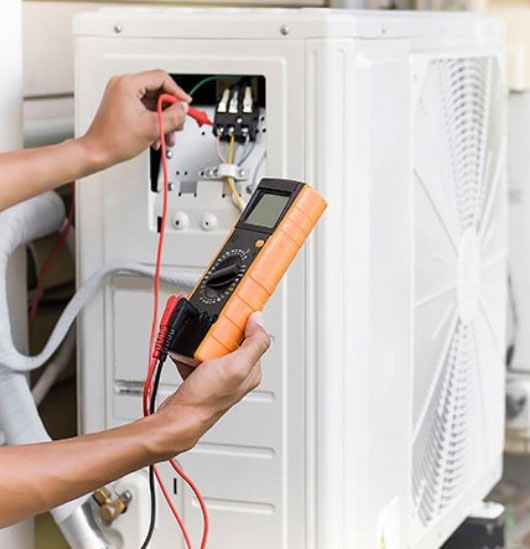
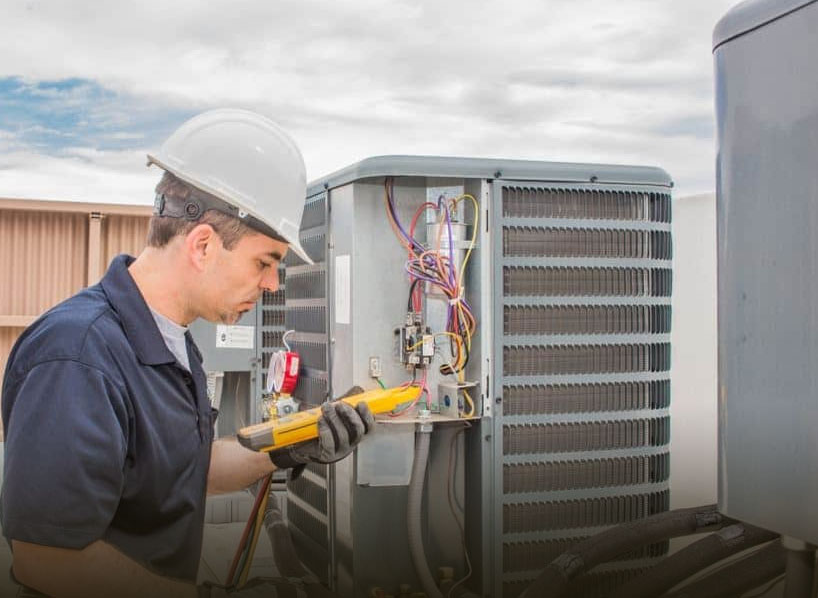
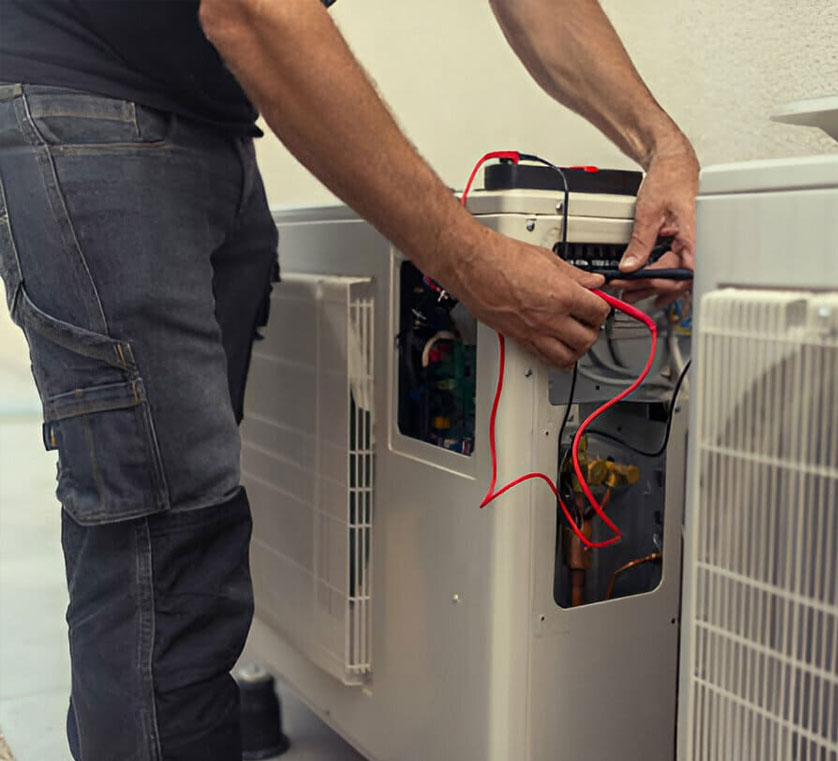
- Electrical testing – supply, capacitors, fan motors and wiring are tested with a meter, not guessed at.
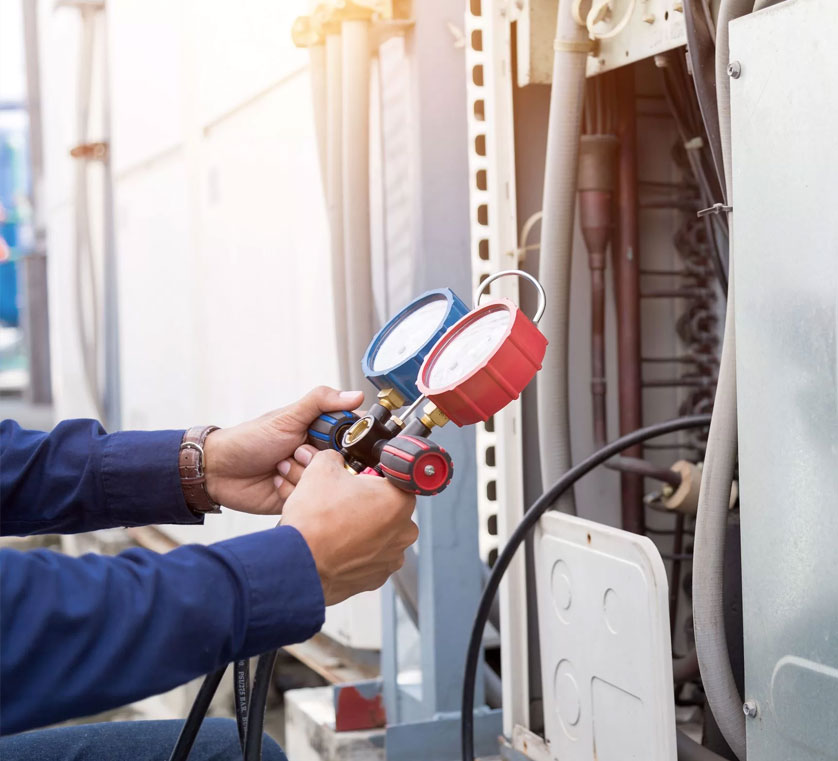
- Refrigerant and pressure check – gauges confirm whether the system is correctly charged or leaking.
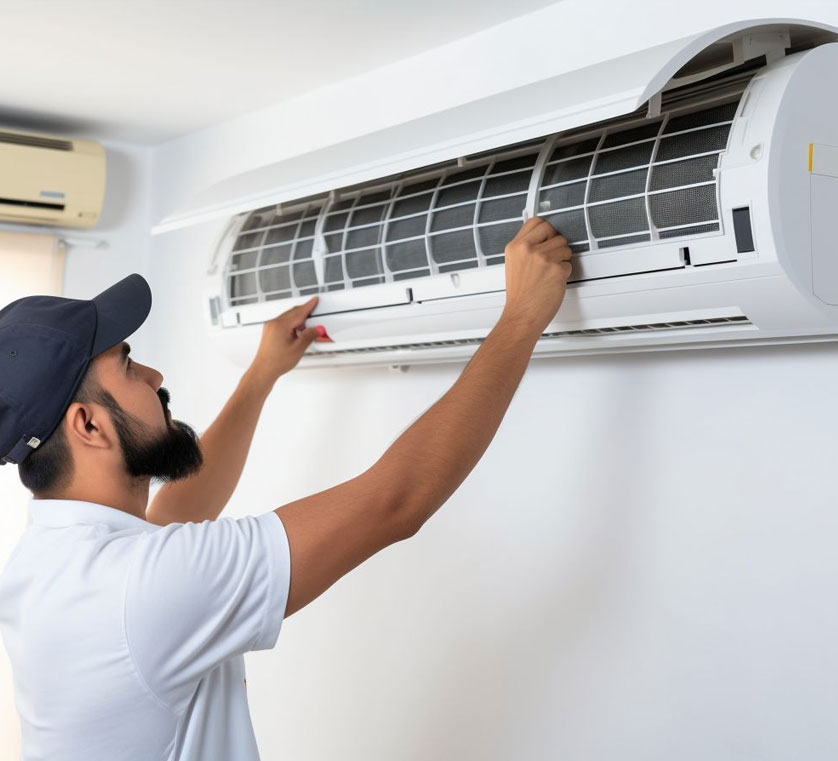
- Drainage and airflow check – filters, coil, drain line and tray are inspected for blockages and leaks.
- Clear report and price – you get a plain-English explanation and the cost of the repair before we start.
Pricing Guide
How Much Does Split System AC Repair Cost?
A diagnostic call-out for a split system generally costs about $120–$180. Common repairs such as a capacitor, sensor, drain clearing or fan motor typically land between $150 and $600 including parts. Major faults like a failed compressor or main circuit board are quoted individually, and on an older unit replacement can be the better value.
| Price driver | How it affects the cost |
|---|---|
| Type of fault | A blocked drain is quick; a refrigerant leak needs finding, repairing and re-gassing |
| Parts required | Sensors and capacitors are inexpensive; boards and compressors cost much more |
| Access to the units | Second-storey or roof-mounted outdoor units add time and safety equipment |
| Age and model | Parts for older or less common models can be harder to source |
How We Diagnose
How We Diagnose and Repair Your Split System in Four Steps
Our fault-finding process is simple to follow and keeps you informed at each stage:
- Tell us the symptoms – call or send an enquiry with the fault, any error code and the make of your unit.
- On-site testing – we confirm the symptom and test the electrical, refrigerant and drainage side of the system.
- Explain and quote – we show you what has failed and give a fixed price before any repair work begins.
- Repair and re-test – we fix the fault, run the system in cooling and heating, and check it is performing properly.
Before You Call
Safe Checks You Can Do Before Booking a Repair
Some split system problems are not faults at all, and a few quick checks can save you a call-out:
- Check the mode and set temperature. A unit left in fan, dry or the wrong mode will not cool or heat properly.
- Replace the remote batteries. A dim or blank remote screen is a common cause of an unresponsive unit.
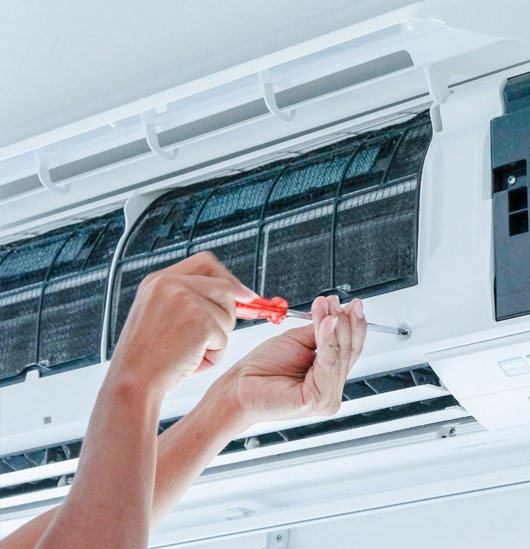
- Clean the filters. Clogged filters cut airflow and can cause icing and dripping.
- Check the circuit breaker. If it has tripped once, reset it. If it trips again, leave it off and call us.
What you should not do is remove covers, touch wiring or try to top up refrigerant yourself. Split systems run on mains power with capacitors that hold a charge, and refrigerant work legally requires a licensed technician. If the unit is leaking water near electrics, smells like burning or the breaker keeps tripping, switch it off at the isolator and book a repair.
Related Services
More Help With Your Split System
Need something other than fault-finding? These services are often booked alongside a repair:
- Split system repairs
- Air conditioning servicing
- Split system cleaning
- Air conditioner maintenance
- Split system installation
- AC repair services
If your system is beyond economical repair, our split system air conditioning installation team can quote a replacement.

Meeting Quality & Safety Requirements
You will have peace of mind because our team will ensure that all the professional work done for your home will meet the strictest quality and safety requirements set by our industry and the Australian Government.
Establishing A Single Point of Contact
You will have reduced stress because there will be one person you can get in touch with to discuss all aspects and help manage all the complexities of the professional work done for your home from start to finish.

Maintaining Transparent Communication
You will have full knowledge of work progress because we will maintain continuous and transparent communication throughout the process to provide you with consistent updates and effective issue resolutions.
Meeting Quality & Safety Requirements
You will have peace of mind because our team will ensure that all the professional work done for your home will meet the strictest quality and safety requirements set by our industry and the Australian Government.
Frequently Asked Questions About Split System AC Repair
Split System Fault-Finding Questions Answered
The most common causes are blocked filters or coils, low refrigerant from a leak, or a failed outdoor fan or capacitor. A split system AC repair visit tests each of these so the real cause is fixed, not just the symptom.
Usually the condensate drain is blocked by dust, mould or insects, or the coil is dirty and overflowing the tray. A unit that has dropped out of level can also leak. Clearing the drain is normally a quick repair.
It is a self-diagnostic code pointing to a fault area such as a sensor, fan, pressure or communication problem. Note the pattern or code and tell us when you book, and we will confirm the cause with testing.
A soft hum and the occasional click as plastic expands are normal. Rattling, grinding, squealing or loud buzzing usually means a loose part, worn fan bearings or an electrical fault and should be checked.
This often points to a reversing valve, sensor or control fault, or a mode setting issue. Check the unit is in cool mode first, then book a diagnosis if it still will not change over.
You can switch it off at the isolator for a few minutes and restart it once. If the fault returns, avoid repeated resets and book a split system AC repair so the stored fault history is still available.
Most diagnoses take under an hour and many common repairs are completed on the same visit. Repairs that need ordered parts, such as circuit boards, are usually finished on a second visit.
We usually respond within one business day and will give you a time window when you book. In peak summer demand, we will tell you honestly how soon we can attend.
Why Greenarmy Services is Your #1 Choice

Proven Top-Tier Quality At Affordable Rates
You will have experts tested and proven by countless homeowners in Western Australia to deliver a wide range of the highest quality services with unmatched quality and reliability delivered at rates that won’t break the bank!

Highly Skilled & Certified Technicians
You will have fully certified, licenced, and insured technicians with decades of knowledge and expertise you can trust to ensure the safety, health, integrity, viability, and energy efficiency of your household for generations to come.
Impeccable Timing With Transparent Rates
You will have a wide range of impeccably precise and timed professional work done for your home at affordable rates that detail all material and labour costs for full disclosure and complete transparency with no hidden costs or charges.