
Installed Properly
Split System Installation: What a Quality Job Looks Like
Two identical air conditioners can perform very differently depending on how they are installed. A rushed split system installation with kinked pipes, poor insulation or a drain without enough fall leads to leaks, ice build-up, noise and higher power bills. A careful one runs quietly and efficiently for years.
This page explains the technical side of the job: how we run the pipework, mount the units, manage condensate and connect power, and why each step matters. If you are comparing quotes, it will help you see what is included and what corners can be cut.
Pipe Runs Explained
Back-to-Back vs Long Pipe Run Installations
The distance between the indoor and outdoor units has the biggest effect on the cost and complexity of an install.
| Install type | What it involves |
|---|---|
| Back-to-back | Indoor and outdoor units on opposite sides of the same wall; shortest pipe run, quickest and cheapest |
| Standard run | Outdoor unit a few metres away along the wall; pipes covered with ducting for a neat finish |
| Long run | Pipes routed through the roof or under the floor to a distant spot; extra pipe, labour and sometimes added refrigerant |
| High-wall or second storey | Ladder or scaffold access and longer drain routes add time |
Every unit has a maximum pipe length and height difference set by the manufacturer, and we stay within them. Read more about our full split system air conditioning installation service.
Mounting And Fixings
Brackets, Wall Strength and Outdoor Unit Placement
The indoor unit hangs on a mounting plate that must be level and fixed into solid structure, not just plasterboard. If it is out of level, condensate can drip from the front of the unit instead of draining away.
The outdoor unit can be mounted in a few ways:
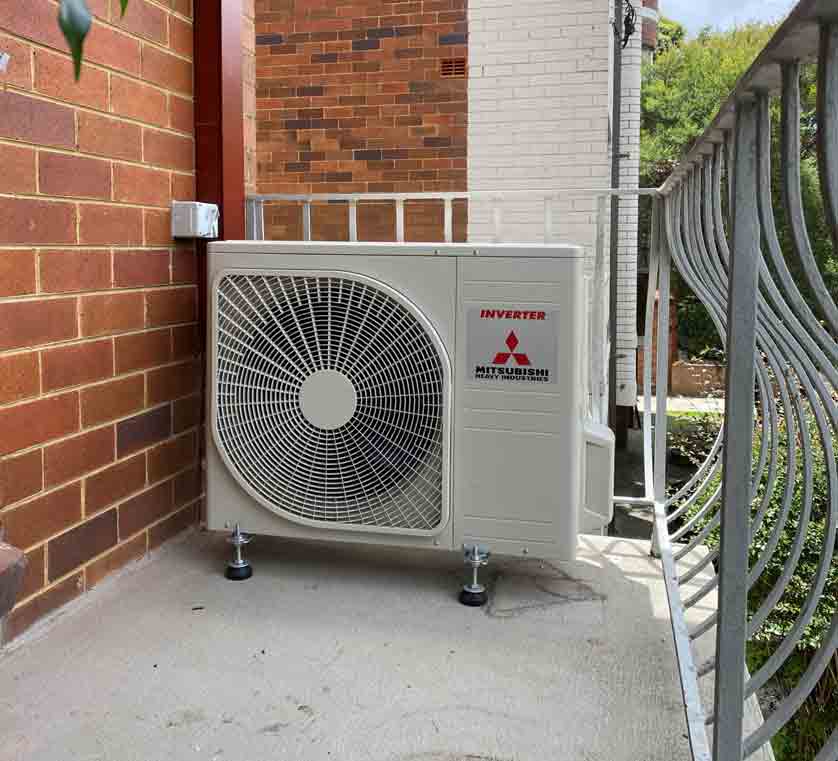
- Ground pad or feet – the most stable option where there is space, with anti-vibration feet to reduce noise.
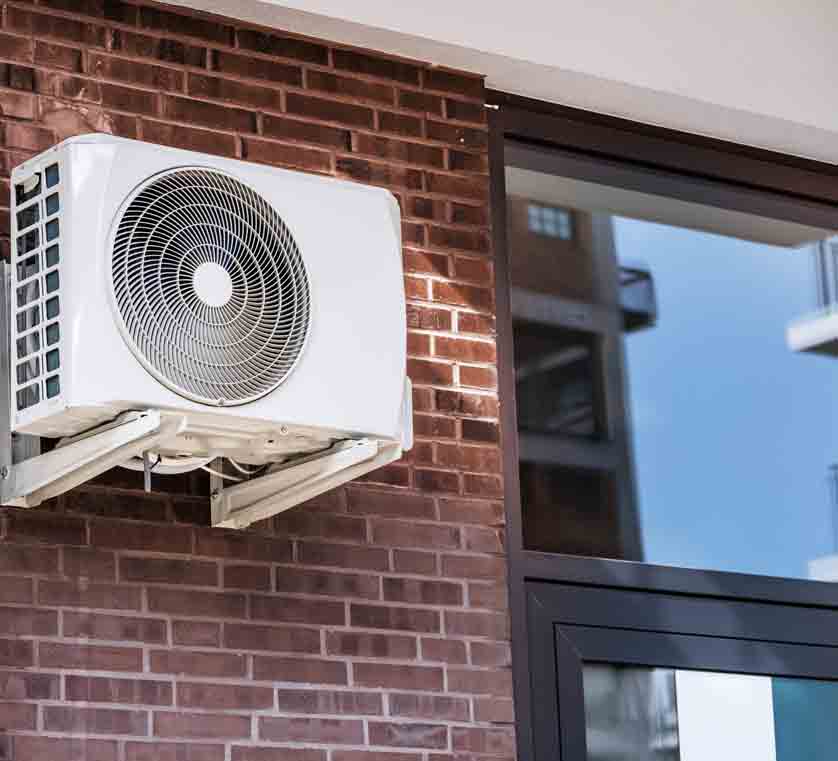
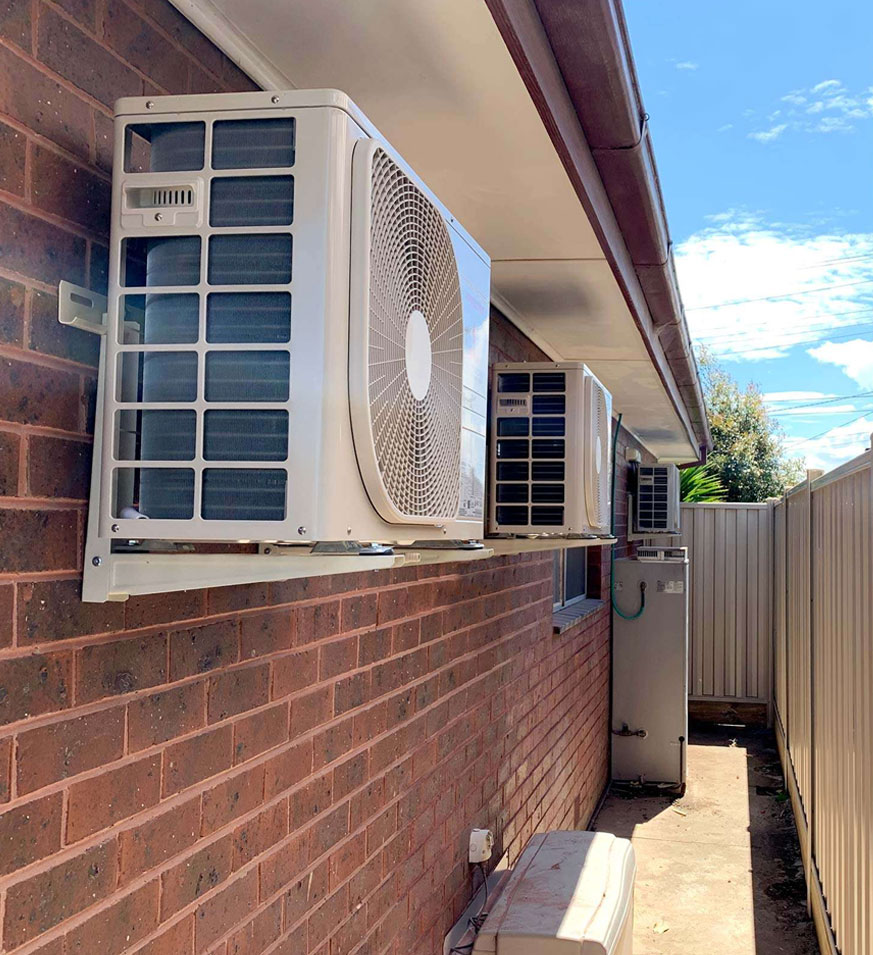
- Wall bracket – saves ground space; must be rated for the unit weight and fixed into masonry or framing.
- Roof or high wall – used when there is no alternative; needs safe access for future servicing.
We leave clearance around the outdoor unit so it can breathe. A unit jammed into a corner recirculates its own hot air and works harder on 40°C days.
Our Technical Checklist
What Our Split System Installation Includes
Each installation follows the same technical checklist:
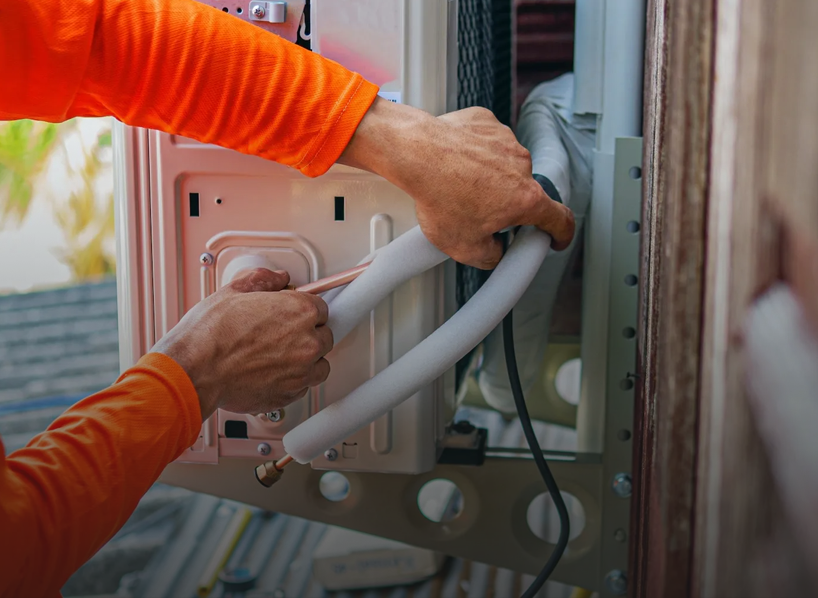
- Insulated copper pipework – correctly sized, flared and insulated to prevent condensation and energy loss.
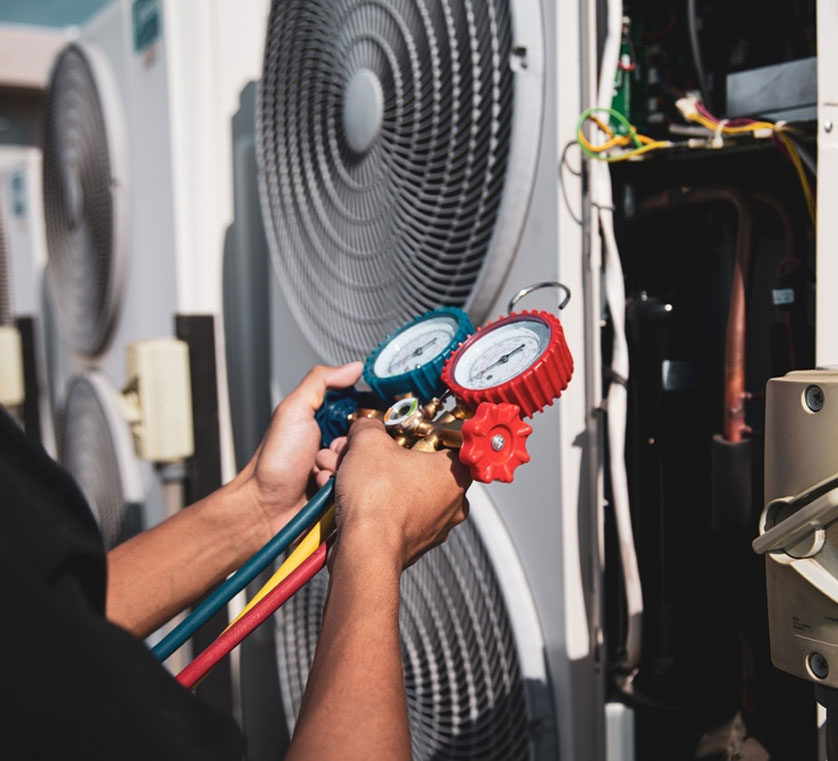
- Nitrogen pressure test – joints are tested for leaks before refrigerant is released.
- Vacuum evacuation – air and moisture are removed from the lines, which protects the compressor.
- Condensate drain with fall – drain lines run downhill to a suitable point, or a condensate pump is fitted where needed.
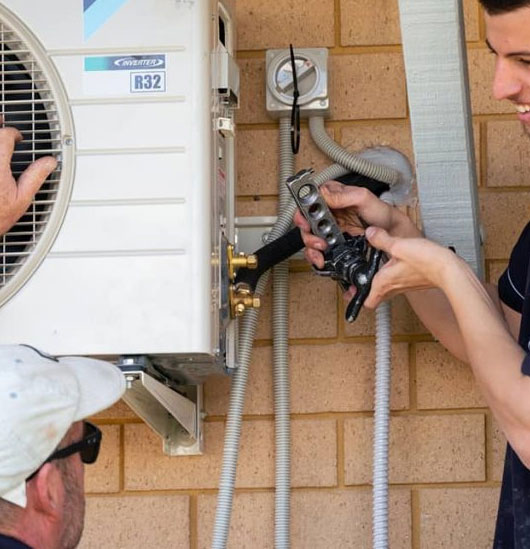
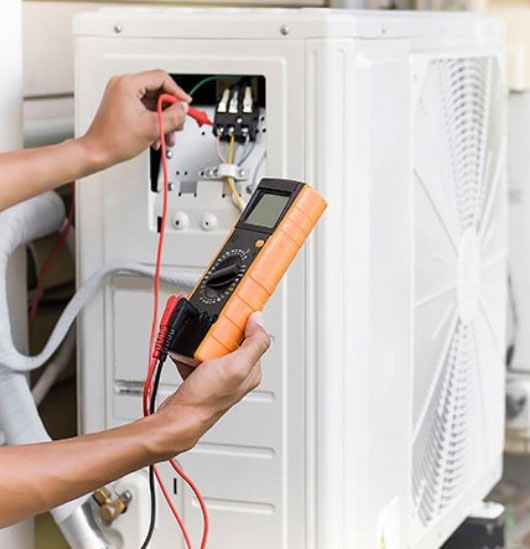
- Electrical connection and isolator – power connected to the correct circuit, with an outdoor isolator as required.
- Commissioning and records – temperatures, pressures and operation checked, and warranty details handed over.
Pricing Guide
How Much Does a Split System Installation Cost?
Supply and installation of a single split system usually costs $1,800–$4,500. If you supply your own unit, a standard back-to-back install starts from about $650, with longer runs and extra work priced on top.
| Price driver | How it affects the cost |
|---|---|
| Pipe length | Each extra metre adds pipe, insulation and labour |
| Mounting | Wall brackets, roof mounts and high walls cost more than ground pads |
| Drainage | A condensate pump adds to the price where gravity drainage is not possible |
| Electrical | A dedicated circuit or switchboard upgrade is quoted separately |
| Wall type | Double brick and concrete take longer to core-drill than timber frame |
Step By Step
Our Four-Stage Installation Method
Every installation follows the same proven method:
- Site assessment – we confirm unit positions, pipe route, drain path, wall construction and power supply.
- Mounting and penetrations – brackets and mounting plates are fixed, and the wall is core-drilled with a slight fall to the outside.
- Pipework, drain and power – lines are run, flared, insulated and connected; the drain is tested and power is connected.
- Pressure test, vacuum and commissioning – we leak-test, evacuate, release refrigerant, run the system and record the results.

Protecting Your Investment
Warranty, Compliance and Why Installation Quality Matters
Most manufacturers require their units to be installed by appropriately licensed technicians and to their installation manual. Poor workmanship can put your warranty at risk and cause problems that only appear months later.
Common faults we see from poor installs include:
- Water dripping indoors from a drain with no fall or a unit out of level.
- Slow refrigerant leaks from badly made flare joints.
- Ice on the pipes or poor cooling from moisture left in the lines.
- Noise and vibration from outdoor units sitting directly on timber decks or thin walls.
In Australia, handling refrigerant requires a refrigerant handling licence, and fixed electrical work must be done by a licensed electrician. Ask any installer to confirm they hold the right licences before work starts.
Related Services
More Split System and Air Conditioning Services
Need something beyond a new install? These services cover the rest of your system’s life:
- Split system servicing
- Split system repairs
- Split system cleaning
- Air conditioner maintenance
- Air conditioning installations
- Split installs for Perth home types
- Ducted air conditioning installation
- Heating system installation
For an overview of everything we install, visit our split system air conditioning installation page.

Meeting Quality & Safety Requirements
You will have peace of mind because our team will ensure that all the professional work done for your home will meet the strictest quality and safety requirements set by our industry and the Australian Government.

Establishing A Single Point of Contact
You will have reduced stress because there will be one person you can get in touch with to discuss all aspects and help manage all the complexities of the professional work done for your home from start to finish.

Maintaining Transparent Communication
You will have full knowledge of work progress because we will maintain continuous and transparent communication throughout the process to provide you with consistent updates and effective issue resolutions.
Meeting Quality & Safety Requirements
You will have peace of mind because our team will ensure that all the professional work done for your home will meet the strictest quality and safety requirements set by our industry and the Australian Government.
Frequently Asked Questions About Split System Installation
Technical Installation Questions Answered
A back-to-back split system installation has the indoor and outdoor units on opposite sides of the same wall, so the pipe run is very short. It is the quickest and lowest-cost type of install.
Each model has a maximum pipe length and height difference set by the manufacturer. Many residential splits allow runs well beyond a back-to-back install, but longer runs cost more and may need extra refrigerant.
Pressure testing finds leaks before refrigerant is released. Vacuuming removes air and moisture that would otherwise reduce efficiency and can damage the compressor over time.
The indoor unit produces condensate that drains through a pipe to the outside, usually to a garden bed or stormwater point. If there is no downhill path, a small condensate pump is fitted.
Smaller units can often run from an existing circuit, while larger units commonly need a dedicated circuit. We check your switchboard and arrange licensed electrical work where required.
Yes, with the right brackets and safe access. Ground mounting is usually preferred because it is quieter and easier to service, so we only go high when there is no better option.
Common problems include water leaking indoors, refrigerant leaks from poor joints, ice on the pipes, noise and vibration. Most of these trace back to rushed pipework, drainage or mounting.
Manufacturers generally require installation by suitably licensed technicians following their instructions. A split system installation done to that standard helps keep your manufacturer warranty valid.
Why Greenarmy Services is Your #1 Choice

Proven Top-Tier Quality At Affordable Rates
You will have experts tested and proven by countless homeowners in Western Australia to deliver a wide range of the highest quality services with unmatched quality and reliability delivered at rates that won’t break the bank!

Highly Skilled & Certified Technicians
You will have fully certified, licenced, and insured technicians with decades of knowledge and expertise you can trust to ensure the safety, health, integrity, viability, and energy efficiency of your household for generations to come.

Impeccable Timing With Transparent Rates
You will have a wide range of impeccably precise and timed professional work done for your home at affordable rates that detail all material and labour costs for full disclosure and complete transparency with no hidden costs or charges.